How Josiah Wedgwood Saved His Business in 1772: The Invention of Cost Accounting
In 1772 Josiah Wedgwood was selling worldwide and nearly broke. He built a cost accounting system and found four numbers he had been guessing at. Most business owners still cannot answer them.

Why did Josiah Wedgwood almost go bankrupt in 1769?
Josiah Wedgwood was the most successful potter in England and almost went broke anyway. By late 1769 he and his partner Thomas Bentley were sitting on unsold stock, unpaid bills, and the edge of bankruptcy. So in 1772 he did something he had never done: he opened his own books using double-entry bookkeeping, the method Luca Pacioli had printed in Venice in 1494. He built what historians now call the first modern cost accounting system. Out came four numbers he had been guessing at his whole career — which products actually made him money, which costs moved with the work and which ran no matter what, how many days passed before cash came back, and what a job really cost before he quoted it. Answering those four is why he survived the credit crisis of 1772, a crash that closed doors all over England.
He was selling all over the world, and nearly broke
Josiah Wedgwood was selling all over the world... and nearly broke!
In 1767, he wrote that his pottery had spread "almost over the whole Globe."
Two years later, he and his partner were sitting on unsold items, unpaid bills, and at the edge of bankruptcy.
So in 1772, he did something he had never done before.
He implemented double-entry bookkeeping.
The method wasn't new. A man named Luca Pacioli had documented it back in 1494, learning from what Venetian merchants had been doing for centuries.
What did he find?
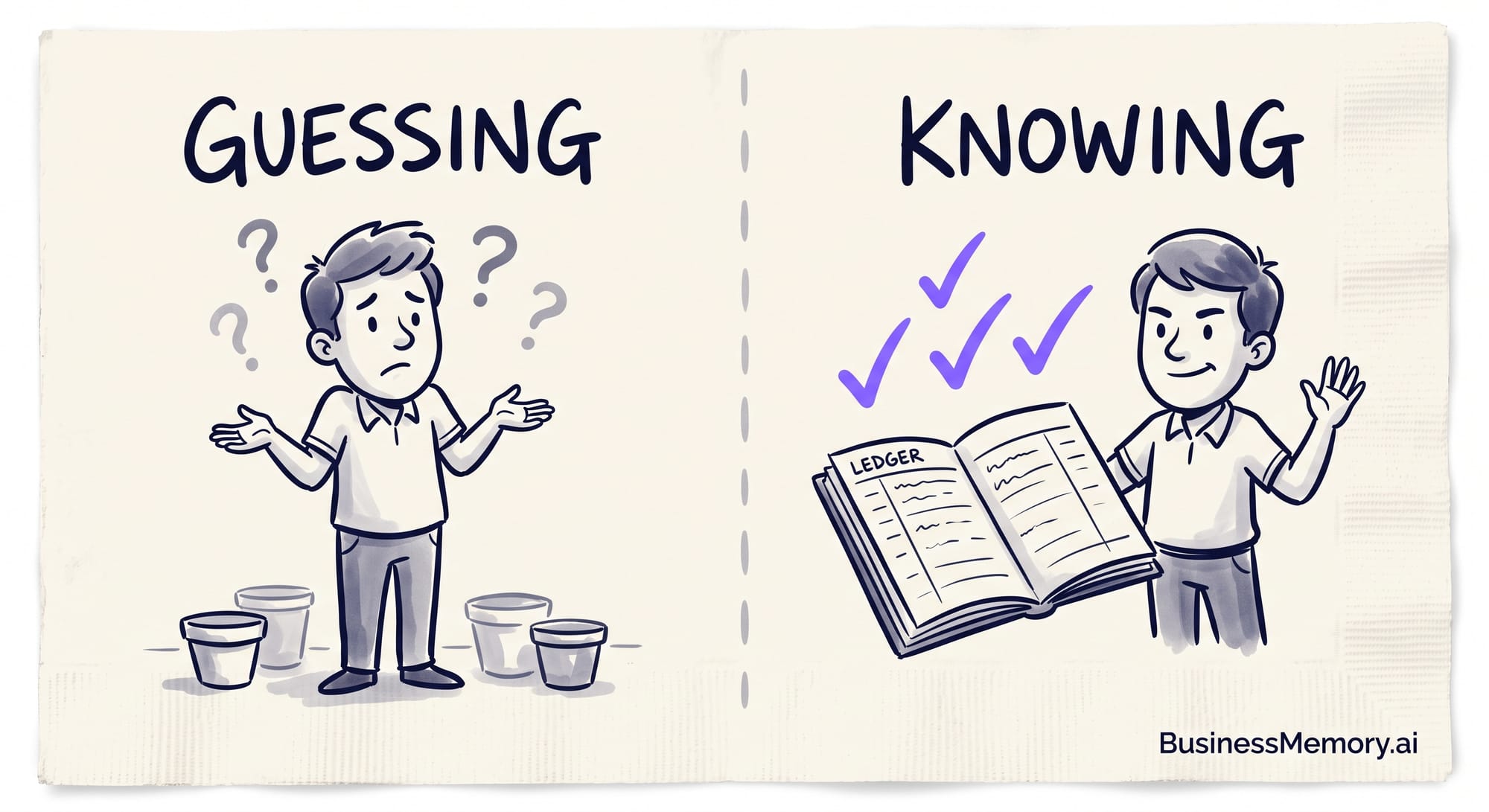
He realized he had been guessing at his business finances the entire time.
His first "aha" moment was spotting a massive cash flow problem:
His production runs were too short.
Cash went out for materials and wages, but it wasn't collected fast enough to fund the next order.
But then, hiding in that same data, he found the secret that made him incredibly rich: The more he made, the cheaper every single piece got.
He understood economies of scale — all thanks to his own ledger!
Because he understood his numbers so well, his business survived the terrible 1772 economic crash that wiped out businesses across England.
Why do so many small businesses fail?
Both are real: the hard law of the market, and the owner's own planning.
They are not equal.
The 1772 crash WAS the hard law of the free market.
It closed doors all over England, and no plan would have stopped it.
Somebody always says, "But the market was against me!"
It was against Wedgwood too. Same year. Same crash.
The market decides how hard the year is. It does not decide who walks out of it.
The four numbers most business owners cannot answer
I don't think most owners plan badly. I think they plan on numbers they have never actually seen. I did it myself for years.
Ask these four about your own business. Notice how long each answer takes:
- Which of your products or jobs actually makes you money; not which one sells the most
- Which of your costs move with the work, and which keep running whether you sell anything or not?
- How many days pass between paying for a job and getting paid for it?
- What does a job really cost you, before you quote it?
Wedgwood could not answer any one of those in 1769.
After 1772 he could answer all four. Nothing changed about how smart he was.
What Wedgwood could see before and after 1772
| What he needed to know | Before 1772 | After 1772 |
|---|---|---|
| Which products made money | Guessed | Costed, piece by piece |
| Fixed vs variable costs | Not separated | Separated — the discovery that made him rich |
| Days from paying out to getting paid | Unknown | Measured, and the gap closed |
| What a job cost before quoting | Haphazard pricing | Priced from the ledger |
The lesson
Wedgwood was a passionate, hardworking businessman.
But he was BUSY.
He had an amazing business, but lacked the reliable data to see how it actually worked.
I see a similar thing happening today — except now, the ledger is AI.
To me, now it's a good time to ask ourselves:
What could our business tell us, if we had the tools to read the data?
We must stop guessing.
Data gives us superpowers.
#BeBusinessSmart