Why a Business Memory Keeps Paying: American Airlines Cashed the Same Record Twice
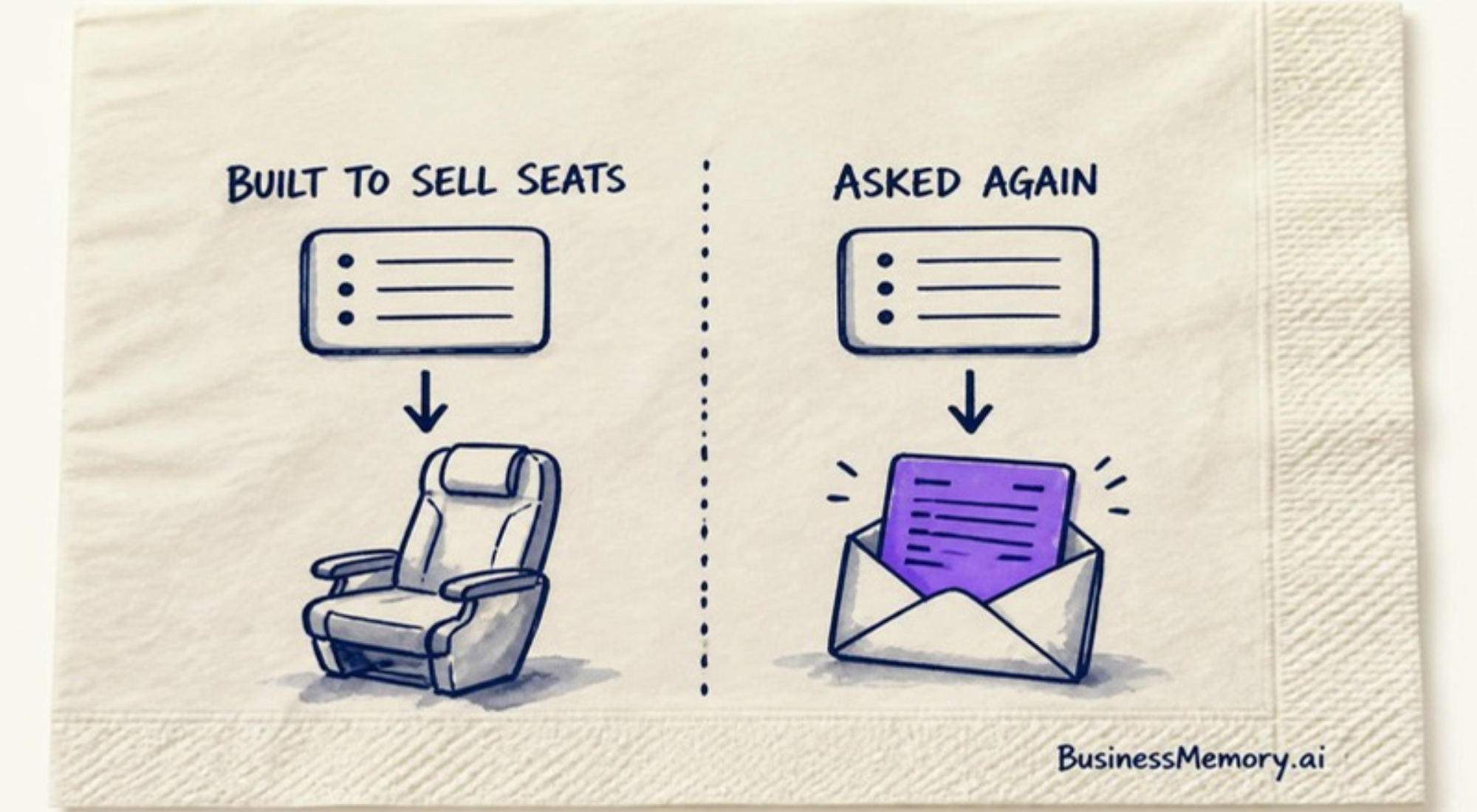
In 1964 American Airlines built a record of who booked which seat. Seventeen years later, that same record started AAdvantage. Forty years after that, the program it started was backing $10 billion.

Why does a business memory keep paying?
Because a kept record answers questions nobody had thought of yet. American Airlines built its SABRE booking record in 1964 to sell seats. In 1981 it searched that same record for the phone numbers that kept coming back, found its 130,000 most frequent flyers, and launched AAdvantage. A business memory works the same way: you write your business down once, and every new question — and every new AI — can read it again.
What did American Airlines find in its own record?
Here is the part most people never hear.
By 1981, SABRE had been taking American's bookings for seventeen years. The first story is here: how a record beat the planes. This is the second one.
Every booking left a phone number behind. Most numbers showed up once. Some showed up again. And again. And again.
So American asked its record a new question: who keeps coming back?
The answer was a list. The 130,000 most frequent flyers, plus 60,000 members of the airline's Admirals Club.
Nobody had to fill out a form. On May 1, 1981, American launched AAdvantage, and those people got a letter with their new account number already inside.
They were members before they ever signed up. The record had already done the work.
Was AAdvantage the first frequent flyer program?
No, and the honest answer makes the lesson stronger. Texas International Airlines had started one in 1979. The idea was not new.
What American had was the record. It did not have to guess who its best customers were. It could look them up.
Less than a week later, United launched its own program, MileagePlus. The race was on. But American started with about 190,000 members on day one, and by April 2021 AAdvantage had more than 115 million — the largest program of its kind.
What was that record worth forty years later?
In March 2021, in the middle of the pandemic, American needed cash.
It raised $10 billion, and what stood behind the money was not a plane. It was the AAdvantage program itself.
Think about it. A list of phone numbers from a booking computer became a loyalty program. The loyalty program became $10 billion of borrowing power.
SABRE was built to sell seats. The loyalty program was never the plan. It was sitting in the record the whole time, waiting for somebody to ask.
A kept record is never finished paying.
What can a small business learn from AAdvantage about business memory?
That you are keeping a record right now — or losing one.
Every quote, every invoice, every "call me back Tuesday" is a phone number in SABRE. One at a time, it looks like nothing. Kept together, it answers questions you have not asked yet. Who buys from us every spring? Which good customer has not called in a year? What price did we give this family last time?
I see the same thing happening with AI in small businesses today. American needed its own giant computer to ask its record a new question. Today, the same AI any owner can rent for a few dollars a month can read your files and answer in plain words.
Now the honest part. The record only pays if it was kept. American could find its frequent flyers because every booking had been written down for seventeen years. A business that keeps its deals in chats and its prices in somebody's head has nothing for the next question to read.
So I keep writing mine down, one day of business at a time. Honestly, I don't know yet which question it will answer next. American didn't either.
A business memory is a private record of everything your business knows — what was agreed, paid, promised and decided — kept on your own computer as plain text files any AI can read, so you can ask anything and get the answer with the exact reference behind it.
Records were never meant for storage. Give your business a memory.
BeBusinessSmart
Questions people ask
Why does a business memory keep paying?
Because the record answers new questions for years. American Airlines kept its SABRE booking record to sell seats, then used the same record in 1981 to find its most frequent flyers and start AAdvantage. A business memory does this for a small business: the deals, payments and promises you write down today can answer a question you have not thought of yet.
How did American Airlines start AAdvantage from SABRE?
It searched its SABRE reservation records for phone numbers that kept coming back. That search found its 130,000 most frequent flyers, and with 60,000 Admirals Club members they were enrolled before launch day, May 1, 1981, and mailed their account numbers.
Do I need a big computer to do what American did?
No. American needed its own computer system in 1981. Today a business memory is plain text files on your own computer, and the AI you already use can read them and answer in plain words, with the file behind every answer.